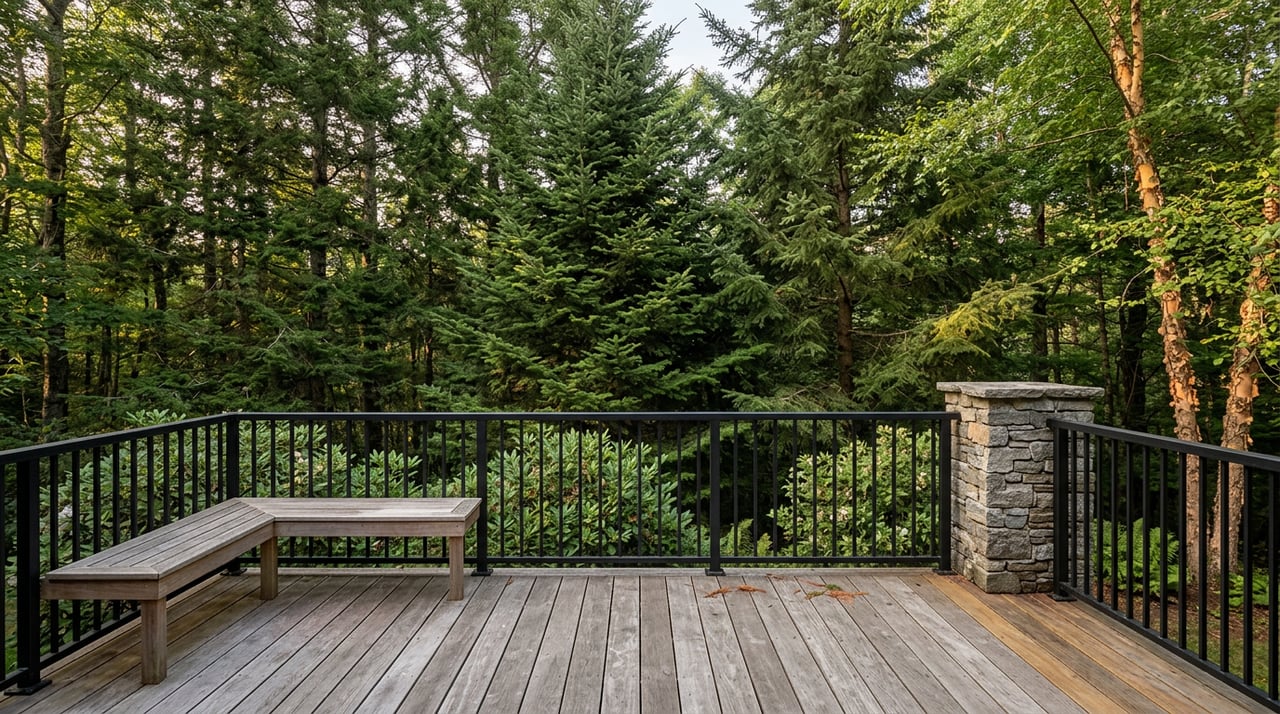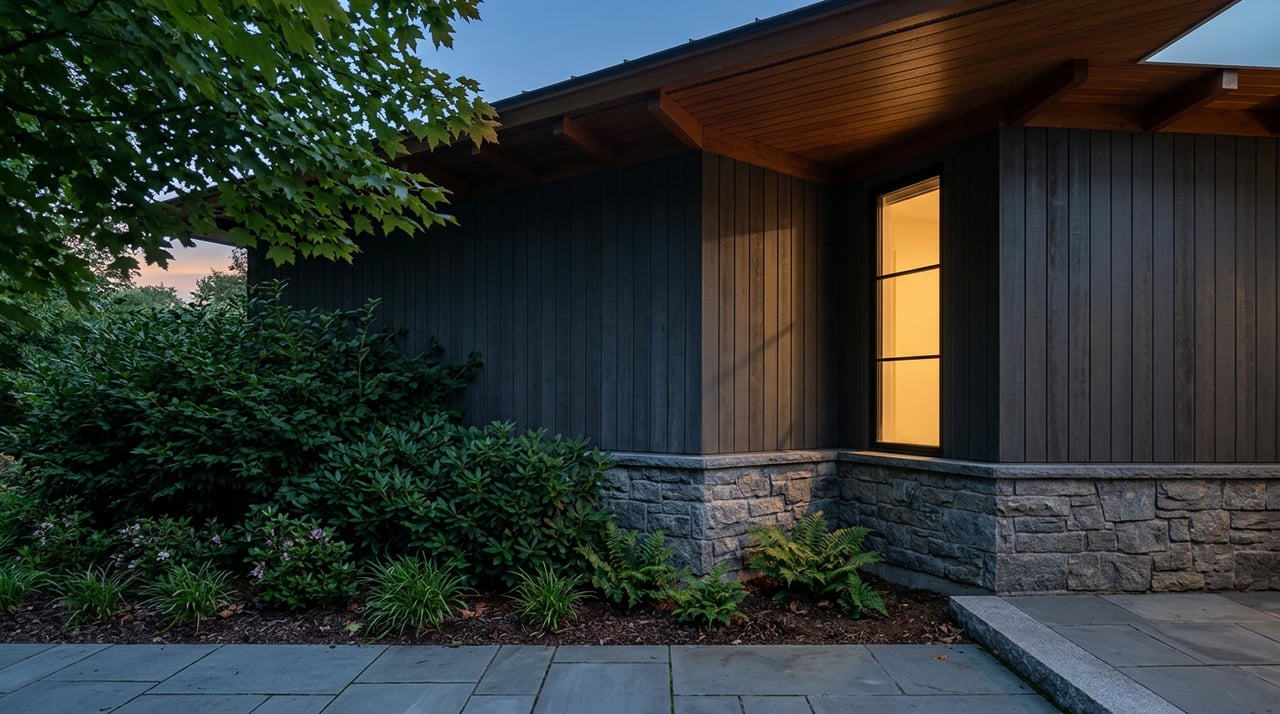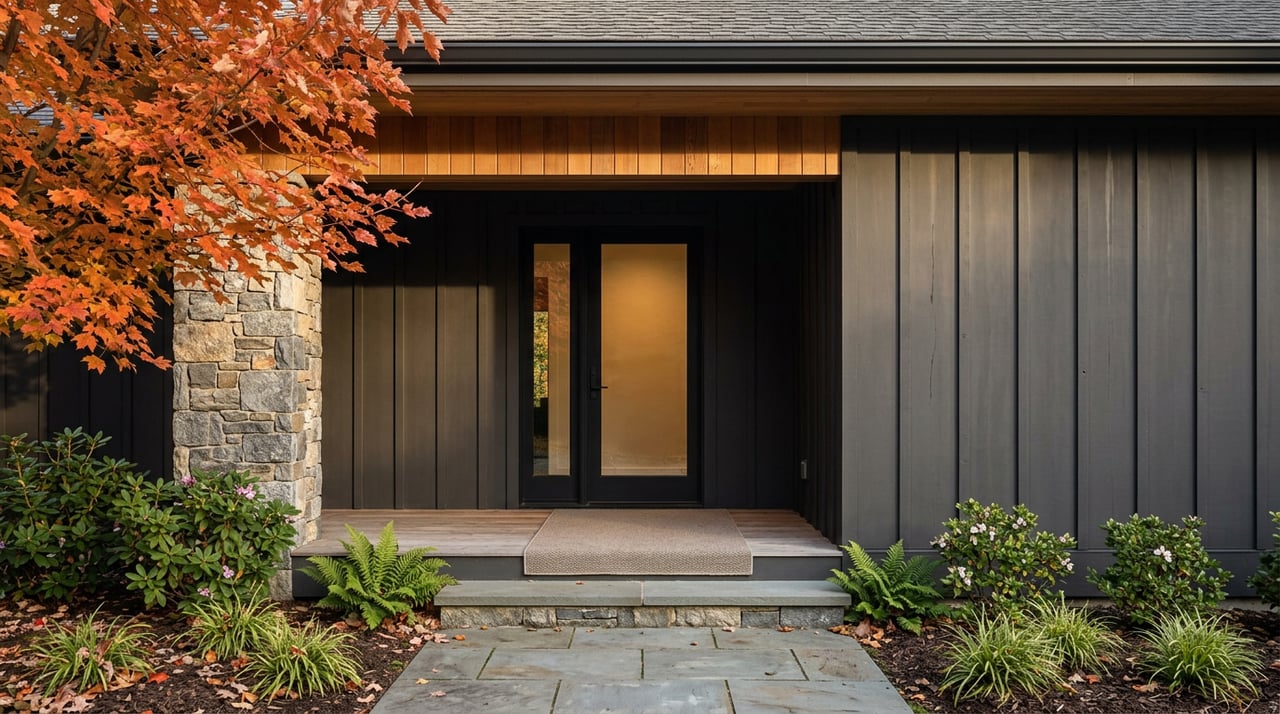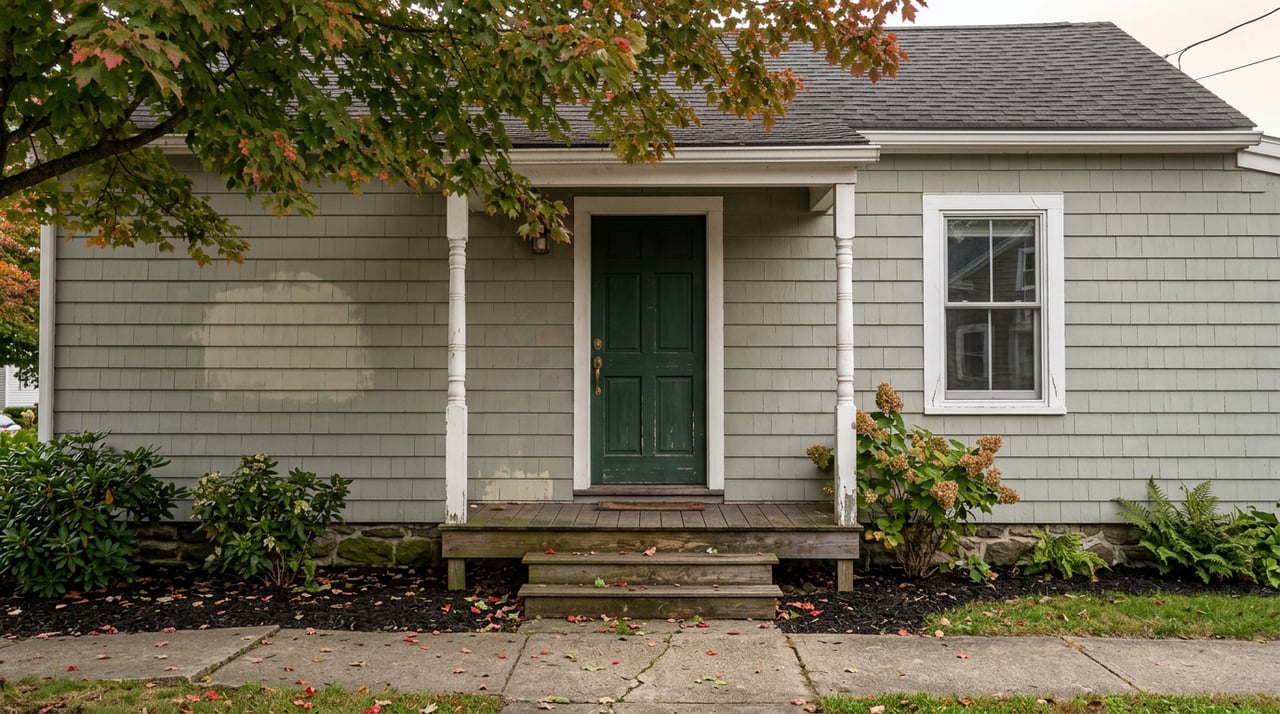
Two cabins sit less than half a mile apart off the same rural route outside Boone. Same view corridor, same builder-grade finishes, same six-figure renovation five years back. One of them can be listed on Airbnb next weekend as a whole house. The other cannot, not legally, not ever, unless the owner moves in and rents out a single bedroom while living there.
The difference has nothing to do with the house. It has to do with a line on a zoning map that most buyers never think to ask about until an agent brings it up, or until a neighbor calls a hotline.
The map matters more than the listing photos
Boone's corporate limits are not the same thing as "Boone" the mailing address. A property can carry a Boone zip code, sit on a road everyone calls Boone, and still fall entirely outside the town's zoning jurisdiction, governed instead by Watauga County. A driveway can straddle the line. The listing photo never shows it. The only way to know for certain is to pull the parcel in the town's GIS system and confirm which side of the boundary the structure actually sits on, because the address will not settle the question for you.
That distinction is the whole ballgame for anyone buying with rental income in the plan, or selling a property where rental income has been part of the pitch.
Homestay versus vacation rental, and why most of in-town Boone doesn't qualify
On December 8, 2021, the Boone Town Council amended the Unified Development Ordinance to draw a hard line between two categories of short-term rental. The amendment took effect June 30, 2022, and it is still the operative rule today.
A homestay rental is the lease of up to two bedrooms in a home where the owner is a full-time resident and stays on the property for the entire length of the guest's visit. It requires an annual zoning permit, currently a $530 application, renewed every year with proof of continued residency.
A vacation rental is everything else, meaning an owner-absent whole-house rental of up to six bedrooms. Here is where the ordinance gets restrictive. Vacation rentals are only a permitted use in the B1 Downtown, B2 Neighborhood Business, and B3 General Business zoning districts, and even inside those commercial districts, a single-family or two-family dwelling can only operate as a vacation rental if it existed as of January 1, 2014. New construction in those same zones does not qualify. On top of that, any vacation rental use is subject to a 75-foot transitional buffer measured from the boundary of the nearest protected residential district (R1, R1A, RR, R2, and RA), which further narrows which parcels actually clear the bar.
In ordinary residential zoning, which is most of in-town Boone, whole-house rental is closed. There is one exception, and it is narrow: an owner may rent the entire house for up to two weeks per year without triggering the vacation rental restrictions. It is a small allowance, similar in spirit to the federal tax rule that lets homeowners rent their primary residence for up to 14 days a year without reporting the income, and it functions the same way here. It is a release valve, not a loophole.
Enforcement is a hotline, not an honor system
Boone backs this ordinance with an active complaint system. The town runs a 24/7 reporting line through Host Compliance where neighbors can submit photo and video evidence of a suspected illegal rental or a nuisance complaint related to noise, parking, or trash. A verified violation carries a fine of $200 per day, and if a permit is revoked, the property cannot receive a new homestay or vacation rental permit for 365 days.
This matters for anyone buying an in-town property with a loose plan to "run it a few weekends a year and see how it goes." That plan is not operating in a gray area. It is operating inside an enforcement regime with a paper trail, and a property with a prior notice of violation carries that history with it.
For context on how this ordinance came to exist: back in 2019, when the town council was still debating regulation, council members were working from an estimate of roughly 600 short-term rental operations using Boone addresses, with only about 100 of those confidently located inside the actual town limits, because the rest were difficult to verify. That gap between address and jurisdiction is exactly why the GIS check matters so much today.
The price gap is the ordinance talking
Here is where the numbers start to make sense once you know the rule that produced them. As of this summer, the median sale price of a home inside Boone's town limits sits at $382,000 over the trailing three months, with a median of $327 per square foot, up 37.4 percent year over year. Zoom out to the four-county High Country region and the picture looks different: 152 closed sales in May 2026 totaled $96.4 million with a median sale price of $482,500, and April 2026 was even heavier, with 118 closings totaling $79.3 million at a median of $512,500.
That is not a contradiction. It is the ordinance showing up in the data. In-town inventory skews toward student-adjacent condos, homestay-only single-family homes, and older cottages whose best use as a whole-house rental was quietly closed off by the 2021 amendment. The wider regional figure includes ridge properties and lake-adjacent homes outside town limits where rental-income optionality is still fully intact, and buyers are pricing that optionality in.
The same mechanism runs in reverse for sellers. A well-kept three-bedroom just outside the corporate limits reaches a larger buyer pool than an equivalent house across the line, because that outside pool includes second-home buyers actively running the numbers on offset rental income. That is part of why some out-of-limits listings clear at prices that in-town comparables simply cannot support. If you are pricing a listing or writing an offer, knowing which pool you are competing in changes the number that makes sense.
A wave of student beds is coming for the in-town long-term play
There is a second factor worth underwriting if your plan for an in-town property is a long-term student rental rather than a short-term one. A joint venture of Landmark Properties, HC2 Capital, and Peninsula Investments has broken ground on The Retreat at Boone, a 625-bed purpose-built student housing project on a 40-acre site along South Wild Cherry Circle, with 148 units split across three to five bedroom floor plans. It is set to open for the 2027-28 academic year and is the first purpose-built student housing project in the city since 2021. Combined with other projects in the pipeline, the total addition works out to roughly 1,631 new beds by that same academic year.
The small condos and cottages that in-town landlords currently rent out by the bedroom to Appalachian State students are the units most exposed to that new supply. If your underwriting for an in-town purchase assumes steady student demand at today's rents, that assumption should account for a meaningful new competitor entering the market within two years.
Before you write the offer or the listing
A few checks are worth running before either side of a transaction moves forward on a rental thesis.
- Pull the parcel in the town's GIS to confirm whether it sits inside or outside Boone's corporate limits. Do not rely on the mailing address.
- If the parcel is inside town limits, check the zoning district and, if it falls in B1, B2, or B3, confirm the structure existed as of January 1, 2014, since that date determines vacation rental eligibility.
- Request the property's Host Compliance history. A prior verified violation carries a 365-day bar on new permits.
- Get the recorded HOA covenants and any rental-specific rules in writing. A property can be fully legal under the town's zoning and still be blocked by an association's own restrictions, since covenants can be more restrictive than the ordinance itself.
- Confirm registration for the Watauga County Room Occupancy Tax, currently 6 percent of gross short-term rental receipts, due on the 15th of each month and considered late after the 20th.
None of this shows up on a portal photo grid. It shows up in the permit file, the zoning map, and the HOA binder, and it is exactly the kind of groundwork that determines what a Boone address is actually worth to the person buying it.
A few questions worth asking early
Does a Boone mailing address guarantee the property is inside town zoning jurisdiction? No. The corporate limits line can run through a neighborhood, and in some cases through a single parcel's driveway, without matching the mailing address at all. The town's GIS is the only reliable source.
Can an HOA block a rental that the town's zoning would otherwise allow? Yes. Recorded covenants can be more restrictive than the town or county ordinance, so a property can clear the zoning test and still be off limits under a homeowners association's own rules.
Is the two-week whole-house allowance available to every homeowner in Boone, or only certain zones? It applies as a general carve-out to the whole-house rental restriction in residential zoning, not as a separate permit type. It is a narrow allowance, not a workaround for operating a full-time vacation rental.
If you are weighing a Boone purchase against its rental math, or pricing a listing where that math already exists, these are the details that change the answer. Robin Lineberger Stykes works through the zoning line, the permit history, and the HOA fine print before an offer goes in, not after. Schedule a consultation to walk through a specific parcel before you write the number.